Tokenized Real Estate
Fractionalized Property Ownership, Rights and Revenue Streams
Real estate tokenization converts property ownership (buildings, land, or portfolios) into digital tokens recorded on the blockchain.
This creates a secure, transparent, and compliant framework that enables fractional ownership, faster settlement, and wider access for institutional and qualified investors.
What is Tokenized Real Estate?
Tokenized real-estate refers to the process of converting ownership rights or revenue streams from real-world property into digital tokens using blockchain technology.
Each token represents a fraction or class of interest in a property (or portfolio) and inherits programmed features such as transferability, dividend distribution (e.g., rent or lease income), and regulatory controls.
Because the tokens are built with smart-contract logic, ownership, transfers and compliance checks become auditable, efficient and accessible in ways traditional real-estate investment seldom allows.
Benefits for Real Estate Developers and Investors
|
Broader Investor BaseThrough asset tokenization, institutions can unlock wider investor access to real estate, reducing minimum ticket sizes without changing the familiar rules and structures of the asset class.
|
Enhanced Liquidity and Efficient SettlementOn-chain transfer and settlement of tokenized interests streamline real estate transactions, replacing slow, manual reconciliation processes with instant, transparent execution.
|
|
Improved Transparency and AuditabilityImmutable on-chain records of token movements, ownership, and income support regulatory compliance, enhance investor transparency, and streamline asset servicing operations.
|
|
Programmable and Flexible Rights ManagementSmart contracts integrate compliance into every transaction, enabling automated KYC/AML checks, income distribution, and rule enforcement without manual intervention.
|
|
Cost Reduction and ScalabilityStandardizing token creation and management on one platform streamlines operations, allowing institutions to expand real estate offerings faster and with lower structural complexity. |

Benefits for Real Estate Developers and Investors
Fractionalisation & Issuance Engine
Support for issuing property tokens representing ownership or income rights, configurable to investor class, region, asset type and token economics.
Secondary Market & Transfer Logic
Native support for peer-to-peer transfer of tokens, programmable restrictions (e.g., minimum hold, lock-up periods), and settlement automation across investor classes.
Compliance & Governance Automation
Role-based access control, KYC/AML workflows, investor restrictions and audit logging embedded into token contracts and platform operations.
Real-Time Asset Monitoring & Reporting
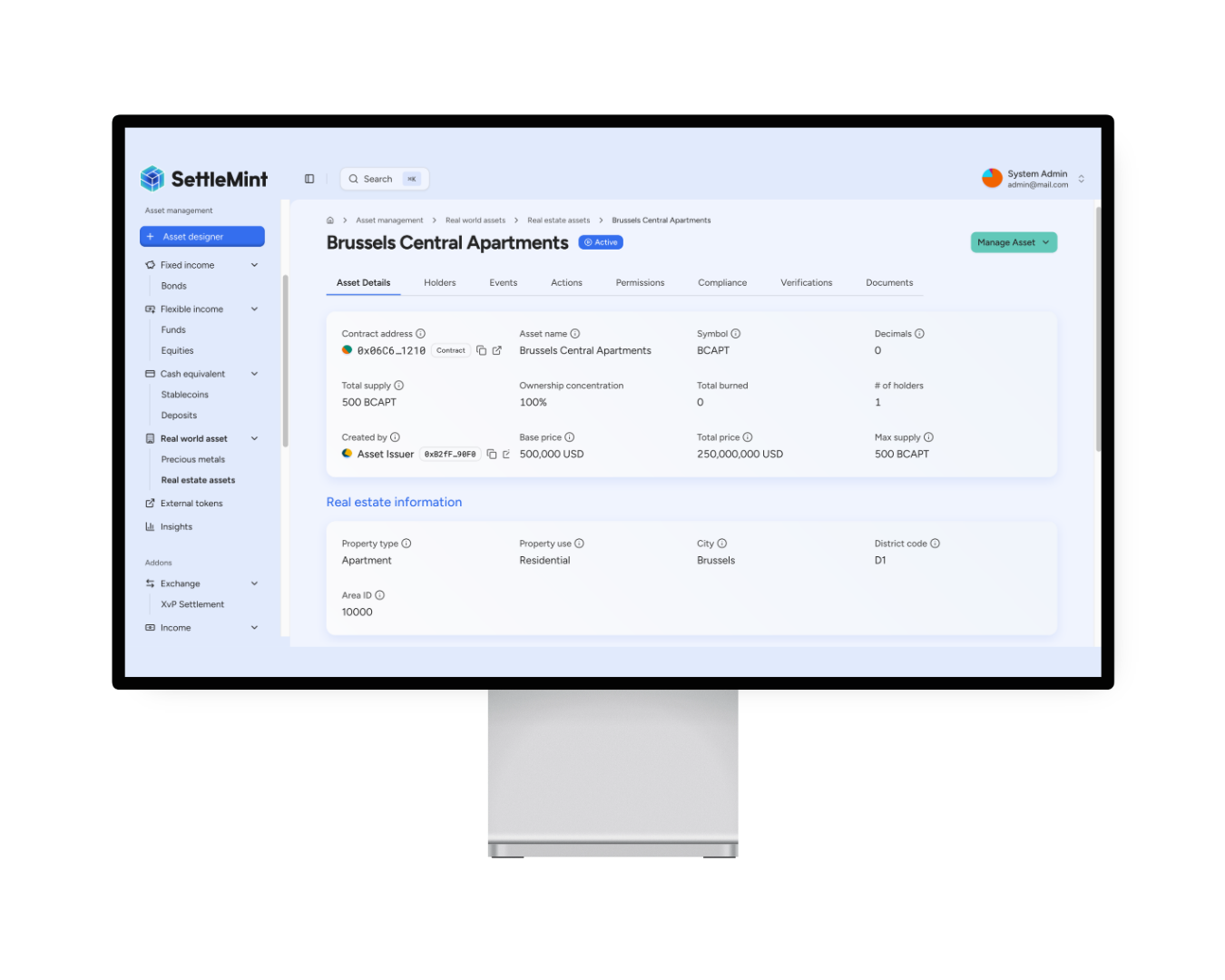
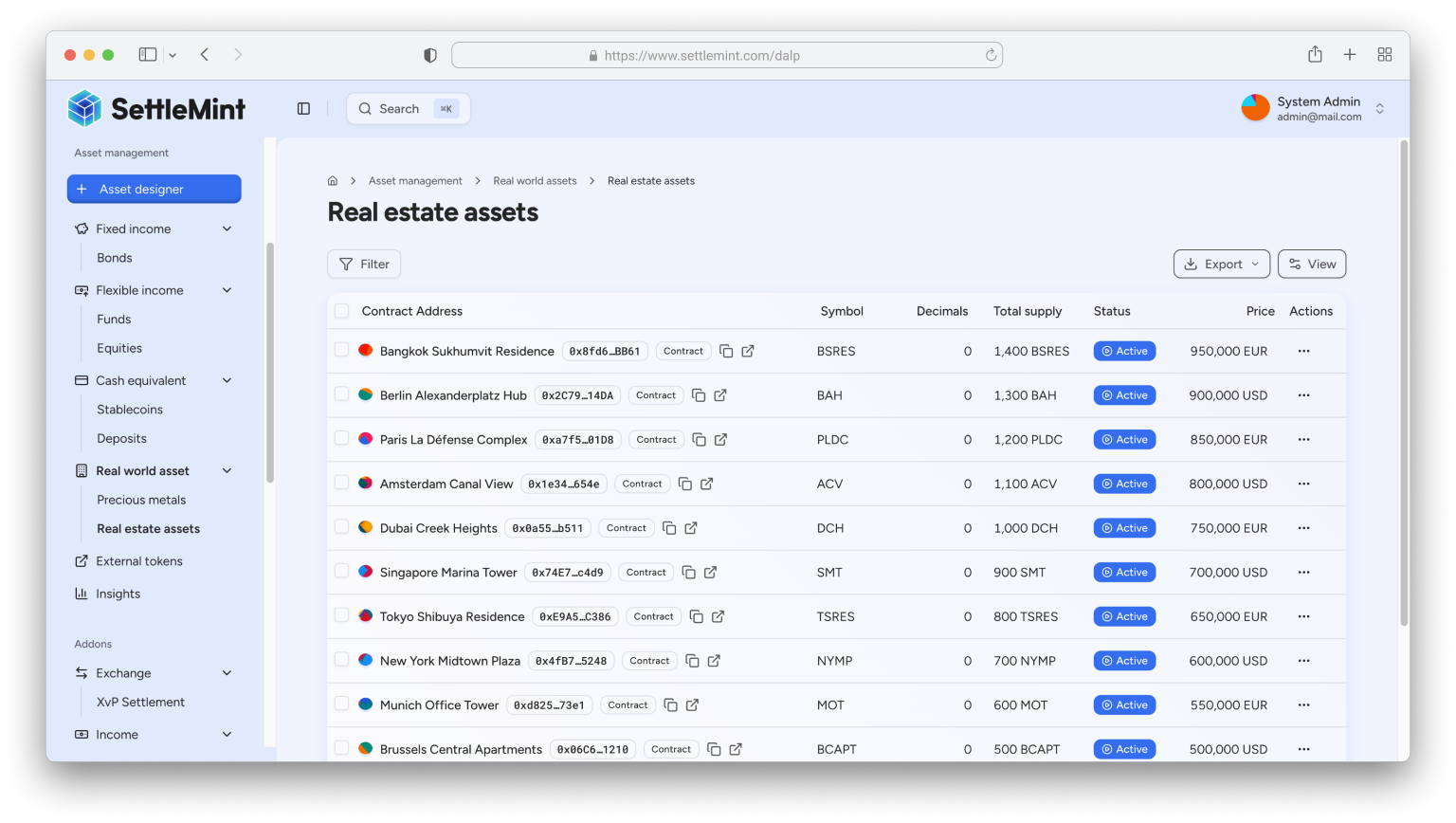
Dashboards and analytics that track token holdings, cash flows (like rent), property metrics, investor distributions and on-chain activity in near real-time.
Use Cases
Real Estate Fund Fractionalization
A real estate fund converting a commercial property portfolio into tokenized shares to attract global investors and enable trading of those shares on secondary platforms.
Residential Development Investment
A developer issuing tokens tied to a residential development where investors receive rental income as automatic distributions via smart contracts.
Bank-Integrated Property investment
A bank offering clients the opportunity to invest in tokenized property alongside traditional asset classes by integrating property-linked tokens into its wealth management platform.
Land-Bank Token Issuance
An institutional owner managing a large land bank and issuing tokens representing future development value, enabling early-stage capital raise with fractional investor access.
Why Choose Tokenized Real Estate
Choosing real-estate tokenization allows institutions to modernize an asset class traditionally characterised by illiquidity, high minimums and opaque ownership structures.
With tokenized real estate, you gain access to a platform that supports digital ownership, transparent flows, programmable logic and standardization — all while satisfying regulatory and institutional requirements. This future-ready model not only enhances investor access and operational efficiency but positions your organization to lead in the next generation of asset infrastructure.