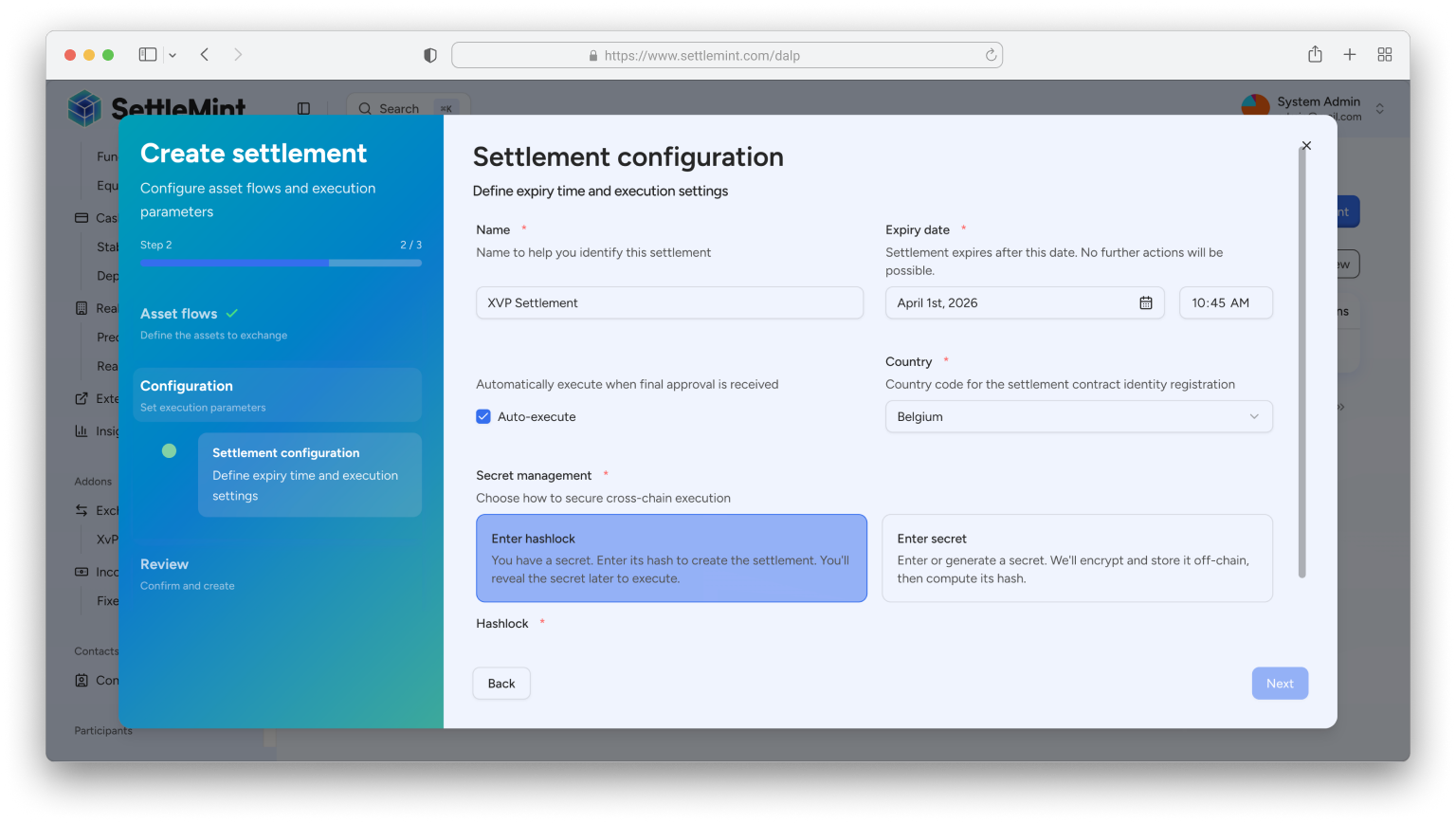
Both asset and cash legs complete. Or both revert.
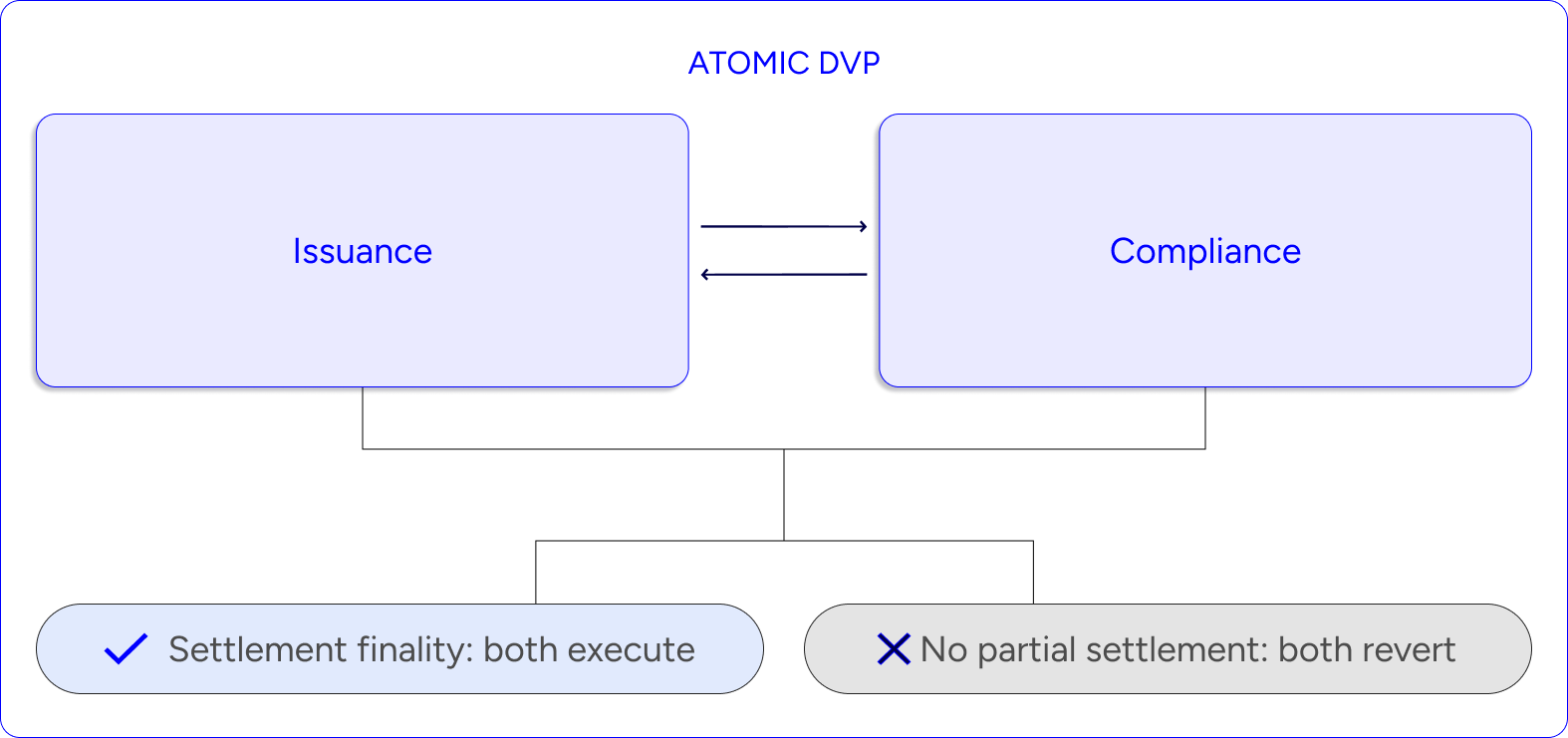
Atomic settlement means asset and cash legs execute together in a single operation. No counterparty risk. No partial settlement. No nightly reconciliation runs to find mismatches.
Why tokenization programs stall
The settlement mismatch that undermines on-chain finance
The fundamental promise of on-chain settlement — instant, final, atomic — breaks when cash remains off-chain.
Tokens settle in seconds; fiat clears in days. Without on-chain cash instruments and atomic settlement mechanics, institutions inherit the worst of both worlds: blockchain complexity with traditional settlement risk.
Operations teams still reconcile across systems. Counterparty risk persists. And every multi-party transaction becomes a coordination exercise with no guarantee of atomicity.
Tokens Settle T+0, Cash Settles T+2
Tokens move on-chain in seconds. Cash clears through traditional rails in one to three days. The mismatch creates counterparty risk that negates the promise of on-chain finance.
Reconciliation Overhead
When asset and cash settle on different timelines and in different systems, operations teams spend hours matching records across ledgers. Nightly reconciliation runs are not eliminated — they multiply.
Multi-Party Complexity
Transactions involving multiple parties and multiple assets require coordinated settlement across counterparties — without a mechanism that guarantees all-or-nothing execution.
how dalp solves it
Atomic Delivery-versus-Payment (DvP)
Asset and cash legs execute together in a single atomic operation. If either leg fails, due to insufficient balance, compliance check failure, or custody approval denied, both revert. The transaction either completes fully or doesn't happen at all.
No counterparty risk
Neither party is exposed to the other failing to deliver
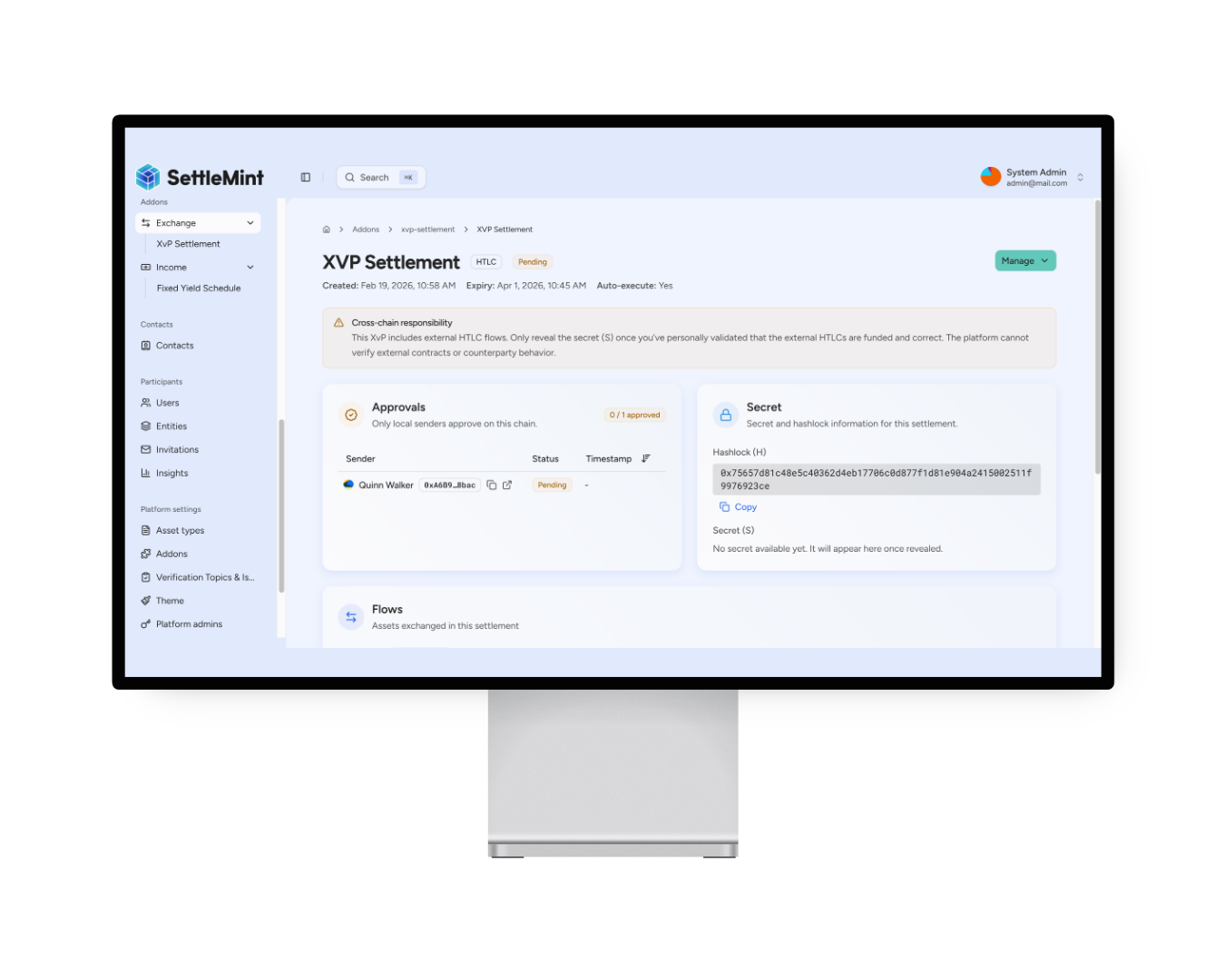
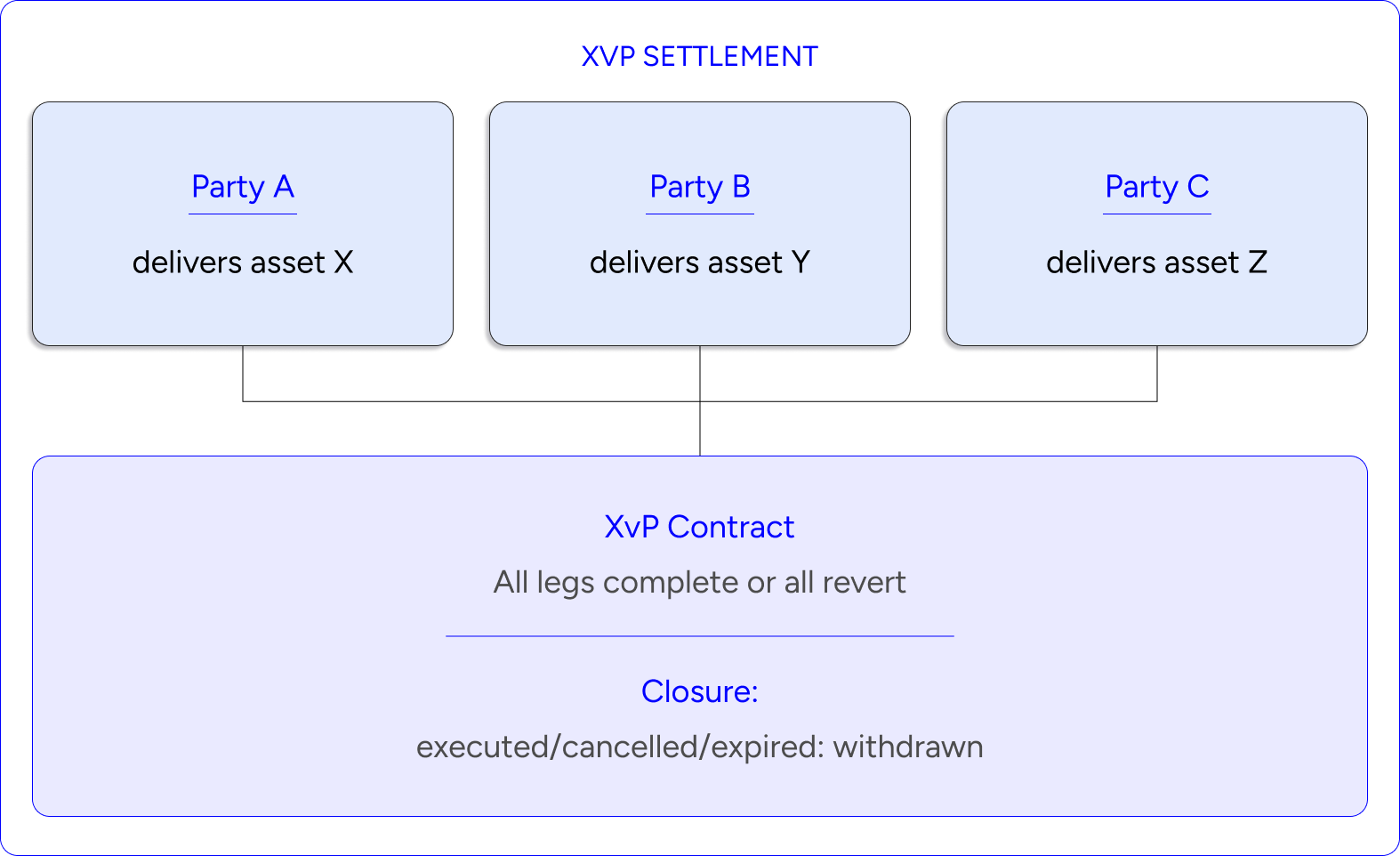
XvP extends atomic guarantees to multi-party, multi-asset transactions. Three or more parties exchanging different instruments settle simultaneously: all legs complete or all revert. Two models at play:
Local (same-chain)
All parties on the same network. Settlement executes in a single atomic transaction with the lowest latency and gas cost
HTLC (cross-chain)
Parties on different chains. Hash Time-Locked Contracts provide atomic cross-chain settlement with cryptographic guarantees
DALP operates using deterministic closure, whereby every settlement session terminates in one auditable end-state — executed, cancelled, or expired-withdrawn. Contract guards enforce terminal state semantics. No ambiguous or stuck sessions.
SettleMint cto and co-founder: roderik van der veer
6-minute platform walkthrough
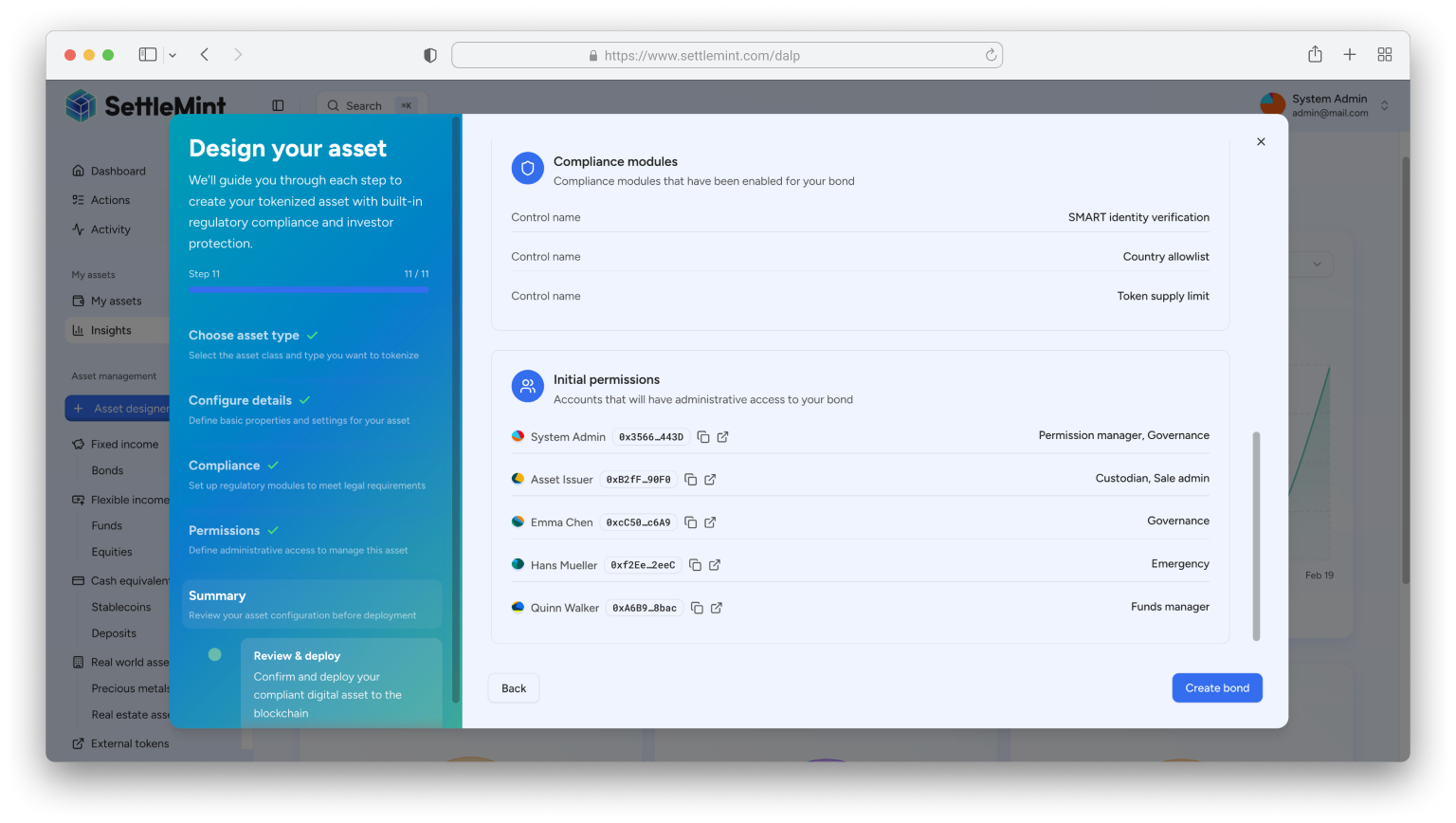
In this demo, Roderik walks through our Digital Asset Lifecycle Platform and the infrastructure behind it. Roderik covers the core building blocks needed to manage digital assets across their lifecycle: asset configuration, participant roles, compliance workflows, issuance, servicing, settlement, reporting, and operational controls.
flexible setup
Settlement closure and finality
Settlement closure follows deterministic rules with explicit state transitions.
01
Closure-readiness checks validate all prerequisites before execution
02
Approval and hashlock verification ensures all parties have confirmed
03
Cancellation vote logic requires consensus for session termination
04
Expiry-withdrawal processing handles timeouts with automatic fund return
Every closure event is projected into the subgraph for real-time observability and historical audit.
What DALP settles
Asset legs (tokenized instruments) and on-chain cash legs (tokenized deposits, stablecoins). Settlement finality is deterministic for on-chain legs.
What DALP doesn't settle
Off-chain fiat transfers. DALP provides configurable settlement infrastructure, but fiat clearing remains on external payment rails.
Settlement observability
Pre-built dashboards track settlement activity, success rates, and exception handling. Automated alerting on failures and timeouts. Full audit trail from session creation through terminal closure.
01
Real-Time Status
Real-Time Status
Settlement session state via subgraph projections and Grafana dashboards.
02
Incident Tracking
Incident Tracking
Detection, notification, and escalation of failures or timeouts.
03
Audit Evidence
Audit Evidence
Every settlement session auditable from creation to terminal closure
01
Real-Time Status
Real-Time Status
Settlement session state via subgraph projections and Grafana dashboards.
02
Incident Tracking
Incident Tracking
Detection, notification, and escalation of failures or timeouts.
03
Audit Evidence
Audit Evidence
Every settlement session auditable from creation to terminal closure
Key capabilities
DvP
Atomic Delivery-versus-Payment — both legs complete or both revert
XvP
Multi-party Exchange-versus-Payment with same atomic guarantees
Settlement Models
Local (same-chain) and HTLC (cross-chain)
Closure States
Deterministic: executed, cancelled, or expired-withdrawn
Compliance
Ex-ante enforcement embedded in every settlement
Finality
T+0 on-chain settlement finality for asset and on-chain cash legs
Observability
Real-time dashboards, incident tracking, full audit trail
Payment Rails
Configurable settlement infrastructure for connectivity
See atomic settlement in action
Walk through DvP, XvP, and cross-chain settlement with our team.