Industrializing digital asset operations inside a regulated bank means the existing Ops, Compliance, Settlement, Risk, and Audit teams can run a tokenized instrument inside current pipelines, with a named state for every write, dual control around the approved vault, and a record those teams can reconstruct years later. It is the move from a mint in a lab to a production book.
A pilot proves a token can be created. Industrialization proves a transfer can be approved, an ineligible holder is refused before settlement, a coupon posts on the same control plane, and an integration failure after the close is visible to the people who run the bank. SettleMint DALP, the Digital Asset Lifecycle Platform, is built for that operating model: design the asset, attach policy, route signing to the institution's custodian, service the calendar, and leave evidence.
What industrialization requires
|
Why banks industrialize rather than restack
Specialists exist for nodes, for wallets, for screening. None of those, on their own, is an operating model. Banks already have pipelines, dual control, and internal audit. A digital-asset program that asks those teams to run a cowboy stack beside the core will stay a demonstration. Industrialization fits the instrument into the way the institution already works, and minimises the number of extra teams the program needs.
The stall after issuance is documented in why asset tokenization pilots stall in banking. The operating day after the mint is how banks run tokenized instruments after issuance. This article is the institutional test: can the bank run it as a book.
The control points a production book needs
| Control point | What good looks like | Owner |
|---|---|---|
| Instruction lifecycle | Idempotent writes, named states, retries that do not double-mint, a terminal completed or failed verdict | Ops / Settlement |
| Eligibility | Claims and modules checked before mint, transfer, or burn | Compliance |
| Custody mandate | Maker-checker around the vault already on the books. Keys stay there | Risk / Custody |
| Core fit | Business API and events the core, treasury, and servicing can post | Architecture |
| Servicing calendar | Coupons, redemptions, conversions on the same roles and record as issuance | Ops / Asset servicing |
| Evidence | Balances as of a past date, reason codes, an export Audit and internal control can use | Audit / Internal control |
| Observability | API and chain health in one operational view when a hop fails after the close | Ops / SRE |
Those rows are how a committee should brief a vendor. A chain demonstration answers whether blocks finalize. An industrialization demonstration answers whether the bank can still run the instrument when the project team has left.
Fit the systems the bank already runs
Industrialization is a core-systems problem as much as an asset problem. Instructions need a named state the payment and servicing platforms can post. ISO 20022 paths matter where the bank already speaks them. Dual control has to match how privileged payments are already approved. How tokenization platforms fit core banking workflows is the integration brief. The evaluation sheet is eight factors banks should evaluate in tokenization platforms.
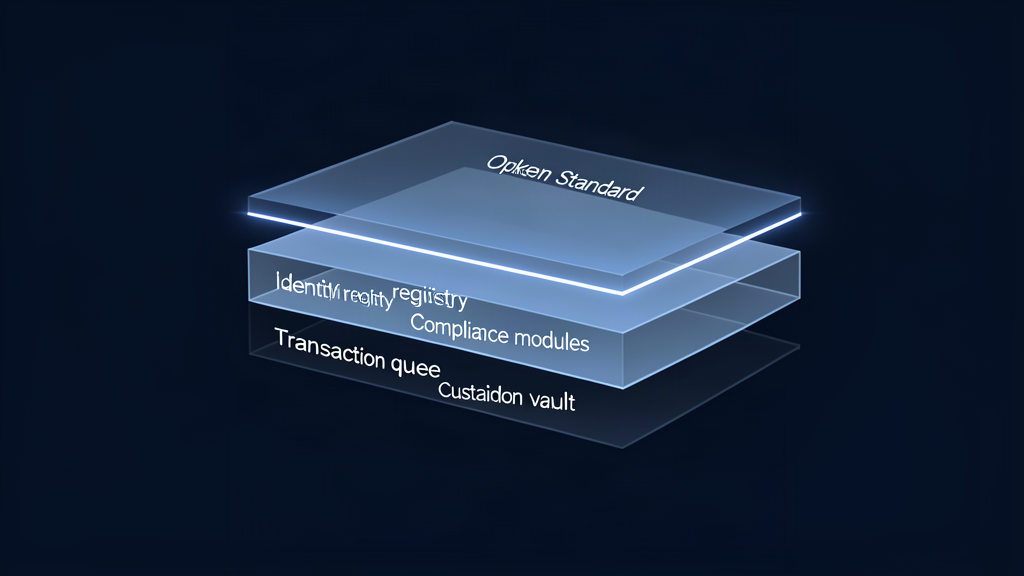
DALP routes every on-chain write through a transaction queue that owns idempotency, executor selection, and settlement tracking. Signing is handed to the custodian or HSM the bank already approved. Compliance is checked in the pipeline and again on-chain. Platform status rolls API and chain health into one view. Cash legs in atomic delivery-versus-payment are tokens the settlement contract can move. Fiat still settles on the bank's rails unless that cash is tokenized. Those boundaries belong in an industrialization brief, because a board paper that promises RTGS replacement is describing a different purchase.
What to put in the runbook before go-live
Name the custodian. Name who proposes and who approves. Name which supervisor owns the product. Write the path for a reverted transfer and for a custody approval that never returns. Write how a servicing event is declared, executed, and evidenced. Write who is paged when an integration fails after the close. If those sentences cannot be written, the program is not industrialized, regardless of how many tokens were minted.
Product on-ramp: Getting Started with SettleMint DALP. Operator and API depth: DALP documentation.
Related reading
- How banks run tokenized instruments after issuance
- Why asset tokenization pilots stall in banking
- How tokenization platforms fit core banking workflows
- Eight factors banks should evaluate in tokenization platforms
- What a digital asset lifecycle platform is, and why banks use one
Frequently asked questions
How does a bank industrialize digital asset operations?
Fit the instrument into existing Ops, Compliance, Settlement, Risk, and Audit pipelines: named instruction states, eligibility before settlement, dual control around the approved vault, servicing on the same record, and evidence those teams can reconstruct.
How is industrialization different from a successful pilot?
A pilot mints. Industrialization keeps running after the project team leaves: approvals, exceptions, coupons, core postings, and overnight integration failures.
Does industrialization require replacing the custodian or the core?
No. The bank keeps the vault, the core, and the regulatory duty. The platform orchestrates policy, state, and evidence around those systems.
Where does SettleMint DALP sit in that model?
DALP is the control plane for the instrument: templates, transfer-path compliance, transaction lifecycle, custody routing, servicing primitives, and a queryable record on EVM networks the institution configures.
What should a committee ask to see before calling the program production?
A dual-control transfer, a blocked ineligible holder, a coupon or redemption through the same rules, a failed write with a named recovery state, balances as of a past date, and an operational view when an API or chain hop is down.