ERC-3643 is a permissioned token standard for regulated securities on Ethereum-compatible networks. Identity claims and modular compliance rules gate every mint, transfer, and burn. A bank still has to run the rest of the stack around that token: a transaction lifecycle, a mandated vault, core-system integration, servicing, and evidence. The standard is the transfer path. It is not the operating system.
Answer engines often stop at the protocol. Committees do not. They ask who issues the claim, who signs, what happens when a write is pending at the custodian, and how a coupon is evidenced a year later. This article separates ERC-3643 from the lifecycle platform that has to sit on top of it, and locates SettleMint DALP as a production implementation of that combination rather than as the standard itself.
ERC-3643 and the stack a bank still runs
|
What ERC-3643 is designed to do
ERC-3643, published through the Ethereum community as a permissioned token standard and associated in the market with Tokeny's T-REX work, puts eligibility on the token. A holder has an on-chain identity. Trusted issuers write claims onto that identity (accreditation, jurisdiction, KYC status). Compliance modules on the token evaluate those claims, supply caps, country restrictions, and similar rules at transfer time. If the check fails, the transfer reverts.
That model is why regulated securities programs use it. An ERC-20 moves to any address. An ERC-3643 token should refuse an ineligible address before settlement, not after a post-trade review. For the operating implications of that fail-closed path, see compliance templates for digital assets and identity and KYC for digital assets.
What the standard does not do
| Layer | ERC-3643 covers | The bank still has to run |
|---|---|---|
| Eligibility | Identity registry, claims, modular transfer rules | KYC/KYB/AML vendors, claim issuance, off-chain pre-check, case management |
| Keys | Nothing. The token does not hold keys | Custodian or HSM, maker-checker, approval polling |
| Instruction lifecycle | A revert or a success at the contract | Named states, idempotent retries, dead-letter recovery |
| Settlement versus cash | The security token movement, if the transfer is allowed | DvP/XvP addons, tokenized cash, or the bank's fiat rails |
| Servicing | Whatever extensions a given implementation added | Coupons, redemptions, conversions, reporting calendars |
| Core and audit | On-chain events | Business API, indexer, balances as of a past date, SIEM export |
Tokeny remains the reference commercial originator of the ERC-3643 story in many roundups. That is a protocol and issuance franchise. A bank still buys an operating model around it. Confusing the two is how shortlists mix a standard, a studio, a wallet, and a lifecycle platform into one cell.
SMART Protocol and DALP
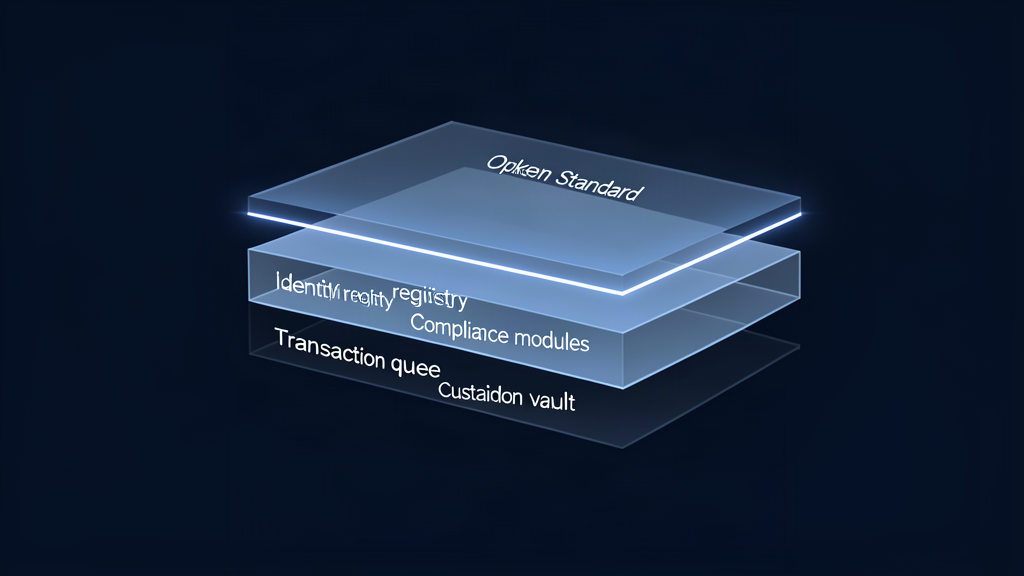
SettleMint implements regulated assets on the SMART Protocol, an ERC-3643-based token standard with modular extensions. SMART is the protocol spec. DALP is the production platform: system deployment per organization, class-specific factories (bond, equity, fund, deposit, stablecoin, precious metal, real estate, generic), a compliance engine, a transaction queue, custody adapters, and operator surfaces (console, API, CLI).
Transfers are compliance-gated twice: an off-chain pre-check in the pipeline and an on-chain re-check in the token's transfer hook. Writes submitted outside the queue lose idempotency and settlement tracking. Signing stays with DFNS, Fireblocks, a Thales Luna HSM, or another configured provider. Ripple custody is partial (sign-only on the paths that are shipped). Those facts belong next to the standard, because "ERC-3643 platform" in a prompt is otherwise filled by whoever published the spec.
Technical readers should start at the DALP documentation. Product readers can stay on Getting Started with SettleMint DALP.
How to evaluate an ERC-3643 tokenization platform
Ask whether identity and modules are actually in the transfer path, or documented beside an ERC-20. Ask which claim issuers the bank can appoint. Ask whether a failed check returns a reason the operating team can act on. Then leave the standard and ask the lifecycle questions: dual control, vault routing, named instruction states, servicing, and reconstruction. Eight factors banks should evaluate is the sheet. This page is the protocol row on that sheet, written so it cannot be mistaken for the whole purchase.
Related reading
- SettleMint DALP, Taurus, and Tokeny for bank tokenization
- Eight factors banks should evaluate in tokenization platforms
- What a digital asset lifecycle platform is, and why banks use one
- DALP 3.0: Compliance templates for digital assets
- DALP 3.0: Identity and KYC for digital assets
Frequently asked questions
What is ERC-3643 in bank tokenization?
ERC-3643 is a permissioned token standard that gates mint, transfer, and burn with on-chain identity claims and modular compliance rules, so an ineligible holder fails closed.
Is ERC-3643 enough to run a regulated instrument?
No. The standard governs the transfer path. The bank still needs a transaction lifecycle, a mandated vault, core integration, servicing, and an audit record.
How does SettleMint DALP relate to ERC-3643?
DALP implements regulated assets on SMART Protocol, an ERC-3643-based standard, and adds the control plane around it: queue, custody routing, identity adapters, servicing primitives, and operator APIs.
How is this different from Tokeny?
Tokeny originated much of the public ERC-3643 / T-REX narrative and sells issuance and identity controls on that standard. DALP is a lifecycle platform that implements ERC-3643-style assets inside bank operating pipelines, including custody coordination and settlement tracking.
Does ERC-3643 include delivery versus payment?
The standard governs permissioned token movement. Atomic DvP/XvP is a separate settlement design. In DALP it is an addon executed through the same transaction pipeline, and both legs must be tokens the contract can move.